
Clinical cleaning services are not a cosmetic or secondary function within healthcare environments. They are a core operational system that directly influences patient outcomes, staff performance, regulatory standing, and organizational credibility. In clinical settings where infection risk, patient vulnerability, and regulatory scrutiny intersect, environmental cleanliness becomes inseparable from quality of care.

This article examines clinical cleaning services through a quality of care lens rather than a service description. It explores how structured cleaning programs affect safety, outcomes, efficiency, and long term performance across healthcare organizations. The focus is on systems, controls, and measurable impact, not surface level housekeeping tasks.
Clinical Cleaning Services Within the Healthcare Quality Framework
Quality of care in healthcare is commonly evaluated across several domains, including patient safety, effectiveness of care, patient experience, operational efficiency, and compliance. Clinical cleaning services influence each of these domains simultaneously.
Unlike general commercial cleaning, clinical cleaning services operate within a risk based framework. Cleaning frequencies, methods, chemicals, and documentation are determined by patient acuity, exposure risk, and regulatory expectations. This positions clinical cleaning as an extension of clinical risk management rather than a standalone facility function.
Healthcare organizations that treat clinical cleaning services as part of their quality infrastructure are better equipped to control infection risk, support care delivery, and sustain consistent performance during periods of high demand.
Infection Prevention and Environmental Risk Control
Healthcare associated infections remain one of the most persistent challenges in clinical environments. Environmental contamination is a recognized contributor to infection transmission, particularly in high touch areas and shared patient spaces.

Clinical cleaning services reduce infection risk by controlling environmental reservoirs of pathogens. This is achieved through repeatable processes rather than reactive cleaning.
Environmental Factors in Infection Transmission
Pathogens can persist on surfaces for extended periods of time. Without structured cleaning protocols, these organisms can transfer between patients, staff, and equipment.
Clinical cleaning services address this risk by focusing on:
- High frequency touchpoints that serve as transmission vectors
- Patient rooms before, during, and after occupancy
- Shared equipment and mobile devices
- Clinical support spaces such as medication rooms and supply areas
By systematically reducing microbial load, clinical cleaning services lower the probability of indirect transmission and support broader infection control strategies led by clinical teams.
Role in Outbreak Prevention and Containment
During outbreaks or periods of increased infection prevalence, environmental control becomes even more critical. Clinical cleaning services support outbreak response through enhanced cleaning protocols, isolation room management, and rapid response procedures.
Consistent execution during these periods protects patients, supports staff safety, and limits operational disruption.
Patient Safety Beyond Infection Control
Patient safety within healthcare environments extends well beyond infection prevention protocols. The physical condition, organization, and readiness of care spaces directly influence the likelihood of injuries, exposure incidents, and disruptions to clinical workflows. Environmental factors such as floor conditions, surface contamination, clutter, and room readiness can create safety risks that impact both patients and care teams.
Clinical cleaning services support patient safety by maintaining environments that are not only clean, but also orderly, predictable, and aligned with safe care delivery standards. Through structured processes and clearly defined responsibilities, environmental services contribute to safer patient movement, accurate clinical workflows, and reduced exposure risks.
Influence on Patient Experience and Trust
Patient safety encompasses far more than infection prevention alone. The physical condition, organization, and readiness of the healthcare environment directly influence injury prevention, exposure control, and the reliability of care delivery. In busy clinical settings, environmental hazards can quickly become safety events if they are not proactively managed.
Clinical cleaning services contribute to patient safety by maintaining environments that are not only clean, but also orderly, predictable, and free from preventable hazards. These services support safe movement for patients, visitors, and staff while ensuring that care spaces are prepared to support timely and accurate treatment.

Environmental Safety Contributions
Clinical cleaning programs reduce environmental risks that can lead to adverse events or care disruptions. These contributions extend beyond surface cleanliness and focus on maintaining control over the physical care environment.
Clinical cleaning services help reduce:
- Slip and fall incidents related to spills, debris, or residue on floors
- Cross contamination between clean and soiled areas due to improper separation or workflow breakdowns
- Accidental exposure to biohazards such as blood, bodily fluids, or contaminated materials
- Equipment contamination that may affect treatment accuracy, diagnostics, or medication safety
By addressing these risks systematically, clinical cleaning services support safer care environments across patient rooms, corridors, treatment areas, and support spaces.
Supporting Consistent Room Readiness
Standardized room preparation plays a critical role in patient safety. Inconsistent cleaning or incomplete room turnover can introduce hazards, delay care, or compromise treatment accuracy.
Clinical cleaning services ensure that patient spaces are consistently ready for use by following defined sequences, checklists, and verification processes. This reduces variability between rooms and shifts, supports faster admissions and transfers, and minimizes the likelihood of safety issues related to environmental readiness.
📌 Learn More: Quality care is personal
Impact on Patient Experience and Trust
Patient perception of care quality is shaped from the moment individuals enter a healthcare facility. Environmental conditions serve as immediate, visible signals that influence how patients and families assess professionalism, safety, and organizational competence.
Cleanliness is one of the most noticeable and consistently evaluated aspects of the care environment. When spaces are well maintained, patients are more likely to feel confident in the care they are receiving.
Environmental Signals of Quality
Patients and families commonly associate clean environments with:
- Attention to detail in care delivery
- Commitment to patient safety
- Organizational discipline and accountability
- Respect for patient dignity and comfort
These signals influence trust in both the care team and the healthcare organization as a whole. Consistent cleanliness reinforces the perception that safety and quality are prioritized at every level.
Impact on Engagement and Satisfaction
Patient experience extends beyond visual impressions. Clean and orderly environments contribute to comfort, reduce stress, and support a sense of control during what is often a vulnerable time.
Positive environmental conditions can influence:
- Patient satisfaction scores
- Willingness to follow care instructions
- Overall engagement with treatment plans
When patients feel confident in their surroundings, they are more likely to participate actively in their care.
Regulatory Compliance and Quality Assurance
Healthcare facilities operate within one of the most highly regulated environments in any industry. Environmental cleanliness is not viewed as a support function alone. It is a measurable component of patient safety, infection prevention, and overall facility performance. Regulatory bodies consistently evaluate cleaning practices during surveys, inspections, and accreditation reviews, making environmental services a critical contributor to organizational compliance.
Clinical cleaning services play an essential role in maintaining compliance by integrating standardized procedures, workforce training, documentation practices, and continuous quality monitoring into daily operations. Rather than treating compliance as a periodic event tied to inspections, effective programs embed regulatory readiness into routine workflows.
Alignment With Regulatory Expectations
Clinical cleaning services are structured to align with expectations set by multiple oversight organizations, including:
- The Joint Commission, which evaluates infection prevention practices, environmental hygiene, and documentation during accreditation surveys
- The Centers for Medicare and Medicaid Services, which tie reimbursement and participation requirements to compliance with Conditions of Participation
- State and local health authorities, which enforce region specific sanitation, safety, and reporting standards
- Occupational safety regulators, which focus on worker safety, chemical handling, exposure risks, and training requirements
Meeting these standards requires more than basic cleaning execution. It demands documented processes, validated competencies, and consistent performance measurement. Clinical cleaning programs address this through clearly defined scopes of work, standardized cleaning protocols by area type, and documented task frequencies aligned with regulatory guidance.
Staff training is another critical compliance component. Clinical cleaning services emphasize role specific education, onboarding programs, and ongoing competency validation to ensure technicians understand proper techniques, chemical usage, and infection prevention principles. This structured approach supports survey readiness by demonstrating that cleaning outcomes are the result of intentional, repeatable processes rather than informal practices.
Quality Assurance as a Continuous Process
Quality assurance serves as the operational backbone of regulatory compliance. Effective clinical cleaning services rely on routine inspections, audit tools, and performance tracking to verify that cleaning standards are being met consistently across all areas of the facility.
Common quality assurance elements include:
- Scheduled and random audits using standardized evaluation criteria
- Digital inspection platforms that provide objective scoring and documentation
- Corrective action workflows that address deficiencies promptly
- Trend analysis to identify recurring issues or high risk areas
These systems create transparency and accountability while providing facilities with tangible evidence of compliance. During inspections or surveys, documented audit results and corrective actions demonstrate proactive risk management and a commitment to continuous improvement.
Reducing Organizational Risk
Inconsistent, undocumented, or reactive cleaning practices increase organizational exposure to citations, financial penalties, and reputational damage. Regulatory findings related to environmental cleanliness can trigger corrective action plans, follow up inspections, or negative public reporting, all of which place strain on operational resources.
Clinical cleaning services reduce these risks by establishing consistency across shifts, departments, and facility locations. Standardized processes limit variability, while documented training and inspections provide defensible proof of compliance. This structured approach protects healthcare organizations not only during formal inspections but also during patient safety reviews, infection investigations, and internal audits.
By embedding compliance and quality assurance into everyday operations, clinical cleaning services help healthcare facilities maintain regulatory confidence, support patient safety goals, and reduce long term operational risk without relying on last minute preparation or inspection driven behavior.
Workforce Training and Standardization
The effectiveness of clinical cleaning services depends heavily on workforce competency, consistency, and accountability. Healthcare environments present significantly higher risk than general commercial spaces, requiring cleaning personnel to understand not only how to clean, but why specific protocols exist and how their actions directly affect patient safety and clinical outcomes.
Clinical cleaning staff operate within care environments where vulnerable populations, invasive procedures, and strict regulatory requirements intersect. As a result, workforce training must be structured, ongoing, and aligned with clinical risk rather than limited to basic task instruction.
Core Competency Areas
Clinical cleaning staff receive specialized training that supports safe and effective performance in healthcare settings. These competency areas extend beyond routine cleaning techniques and focus on infection prevention, risk control, and environmental safety.
Key training areas include:
- Infection prevention fundamentals, including modes of transmission and environmental reservoirs
- Proper chemical selection, dilution, and dwell time requirements
- Personal protective equipment use based on task and isolation status
- Zone based and task specific cleaning to prevent cross contamination
- Handling, transport, and disposal of regulated medical waste
Understanding these principles allows cleaning staff to make informed decisions in real time, particularly when conditions change due to isolation requirements, outbreaks, or high patient acuity.
Standardization and Consistency Across Care Environments
Standardized training reduces variability in cleaning outcomes across departments, shifts, and facilities. Consistent processes ensure that patient rooms, clinical spaces, and support areas are cleaned to the same standard regardless of time or location.
Standardization also supports regulatory compliance by ensuring that documented procedures align with actual practice. When expectations are clearly defined and reinforced through training and audits, healthcare organizations achieve more predictable and defensible quality outcomes.
Retention and Workforce Stability
Workforce stability is an often overlooked component of clinical cleaning quality. High turnover disrupts consistency, increases training costs, and introduces variability that can elevate risk.
Clear expectations, structured onboarding, and ongoing education contribute to higher retention rates. Defined career pathways and performance feedback help cleaning staff understand their role within the broader care team.
Stable cleaning teams develop familiarity with facility layouts, clinical workflows, patient populations, and high risk areas. This institutional knowledge enhances situational awareness and supports safer, more efficient operations over time.
Measuring Impact on Quality Outcomes
Healthcare organizations increasingly rely on data to evaluate performance, identify risk, and support continuous improvement. Clinical cleaning services contribute measurable indicators that align directly with quality improvement initiatives and organizational goals.
Rather than viewing cleaning as a background task, performance measurement elevates environmental services as a contributor to patient safety and outcomes.
Performance Metrics
Clinical cleaning services are evaluated using a combination of operational, compliance, and outcome related metrics, including:
- Environmental audit and inspection scores
- Compliance with defined cleaning frequencies and protocols
- Response times for routine and urgent service requests
- Correlation between cleaning performance and infection trends
- Survey readiness and inspection outcomes
These metrics provide visibility into consistency, effectiveness, and risk areas.
Using Data to Drive Improvement
Performance data allows healthcare organizations to move from reactive correction to proactive improvement. Trends identified through audits and inspections inform targeted training, process adjustments, and resource allocation.
When cleaning performance is monitored alongside clinical quality indicators, organizations gain a clearer understanding of how environmental factors influence outcomes. This integrated approach supports evidence based decision making and reinforces the role of clinical cleaning services as part of the overall quality infrastructure.
Consistent measurement and feedback loops help ensure that clinical cleaning services evolve alongside changing care models, regulatory expectations, and patient needs.
Technology and Process Innovation
Technology has become an increasingly important enabler of modern clinical cleaning services, particularly as healthcare organizations place greater emphasis on standardization, documentation, and measurable outcomes. While manual cleaning remains the foundation of effective environmental hygiene, technology enhances consistency, visibility, and accountability across complex clinical environments.

Rather than functioning as standalone solutions, technology tools are most effective when they are embedded into structured cleaning processes. When aligned with clearly defined protocols, training programs, and quality controls, these innovations help reduce variability and support sustained performance.
Tools Supporting Quality
Several technologies are commonly used to strengthen clinical cleaning services and support quality objectives.
Electrostatic disinfection systems improve coverage consistency by applying disinfectants evenly across surfaces, including hard to reach areas. These systems help reduce gaps that can occur with manual application alone and are often used as a supplemental step in patient rooms, isolation areas, and high traffic spaces.
Ultraviolet disinfection technologies are frequently deployed in high risk environments such as intensive care units, operating rooms, and isolation rooms. When used appropriately, ultraviolet systems provide an additional layer of disinfection after manual cleaning, supporting efforts to reduce environmental pathogen levels in critical care areas.
Digital inspection and audit platforms support transparency and accountability by documenting cleaning activities, inspection results, and corrective actions. These tools allow healthcare organizations to track compliance, identify trends, and address performance gaps in real time rather than relying solely on periodic manual audits.
Real time performance dashboards aggregate data from inspections, service requests, and operational metrics to provide leadership with visibility into environmental performance. This data driven approach supports informed decision making, resource allocation, and continuous improvement initiatives.
Supporting Process Improvement and Standardization
Technology also plays a role in reinforcing standardized workflows. Digital checklists, task verification systems, and time stamped documentation help ensure that cleaning tasks are completed consistently across units and shifts. This level of standardization is particularly important in large or multi site healthcare organizations where variability can undermine quality outcomes.
When integrated thoughtfully, technology strengthens existing processes rather than replacing foundational cleaning practices. By enhancing reliability, documentation, and performance monitoring, technology enables clinical cleaning services to better support patient safety, regulatory compliance, and long term quality improvement efforts.
Integration With Clinical Quality Programs
Clinical cleaning services are most effective when they are fully integrated into broader clinical quality and patient safety programs rather than operating as an isolated support function. Alignment with infection prevention, nursing leadership, quality management, and facility operations ensures that environmental practices reinforce clinical priorities and organizational goals.
When clinical cleaning services are embedded within quality programs, cleaning protocols can be adjusted based on patient risk levels, unit specific needs, and evolving care standards. This integration supports a proactive approach to safety rather than a reactive response to issues after they occur.
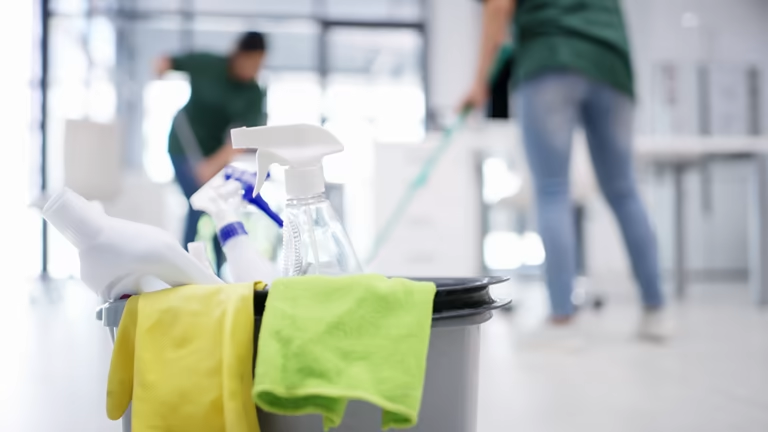
Clear and consistent communication channels play a critical role in this integration. Regular coordination between environmental services, infection prevention teams, and nursing leadership allows facilities to respond quickly to changing patient needs, isolation requirements, and census fluctuations. This collaboration ensures that cleaning priorities remain aligned with real time clinical conditions, supporting safer care delivery and more reliable quality outcomes.
Role in Value Based and Outcomes Focused Care
As healthcare continues to shift toward value based and outcomes focused models, preventable complications, patient experience, and operational efficiency carry increasing financial and organizational weight. Reimbursement structures now emphasize quality indicators such as infection rates, readmissions, length of stay, and patient satisfaction rather than volume of services alone.
Clinical cleaning services support value based care by addressing environmental factors that directly influence these measures. Consistent, risk based cleaning programs help reduce avoidable infections, support predictable patient flow, and maintain care environments that positively influence patient perception. By strengthening environmental reliability, clinical cleaning services help healthcare organizations control costs, protect reimbursement, and improve overall performance.
These contributions extend beyond immediate cleanliness outcomes. Effective clinical cleaning services reduce downstream expenses associated with extended hospital stays, infection treatment, and quality penalties while supporting long term sustainability through safer operations, stronger patient trust, and improved outcomes across the continuum of care.
Opportunities to Explore Related Services
Medical facilities often have unique cleaning and operational needs depending on the type of care provided and the size of the facility. Exploring additional services can help strengthen infection prevention, support regulatory compliance, and create a safer environment for patients and staff.
Expanding your cleaning program can also allow your facility to address specialized areas and high-risk zones with targeted strategies. These services complement standard healthcare cleaning practices and ensure that every part of the facility is properly maintained.

Some of the specialized services facilities often explore include:
- Window Washing
- Floor Scrubbing and Polishing
- Floor Strip and Wax
- Painting and Wall Maintenance
- Carpet Cleaning and Restoration
- Pressure Washing
- Specialty Surface Care
- Ceiling and Light Fixture Cleaning
- Emergency Cleanup Services
Our company offers a full range of healthcare cleaning solutions to meet these and other operational needs. From routine environmental cleaning to specialized medical-grade disinfection, we provide services that support the health and safety of your facility.
📌 Learn More: Your Answer Simplified Guide to Facility Management
Conclusion
Clinical cleaning services are a critical driver of overall quality of care. Their influence extends across infection prevention, patient safety, experience, operational efficiency, and regulatory compliance.
Healthcare organizations that invest in structured, data driven clinical cleaning services strengthen their ability to deliver safe, consistent, and high quality care. Far from a background function, clinical cleaning services operate as a core component of modern healthcare quality systems.


