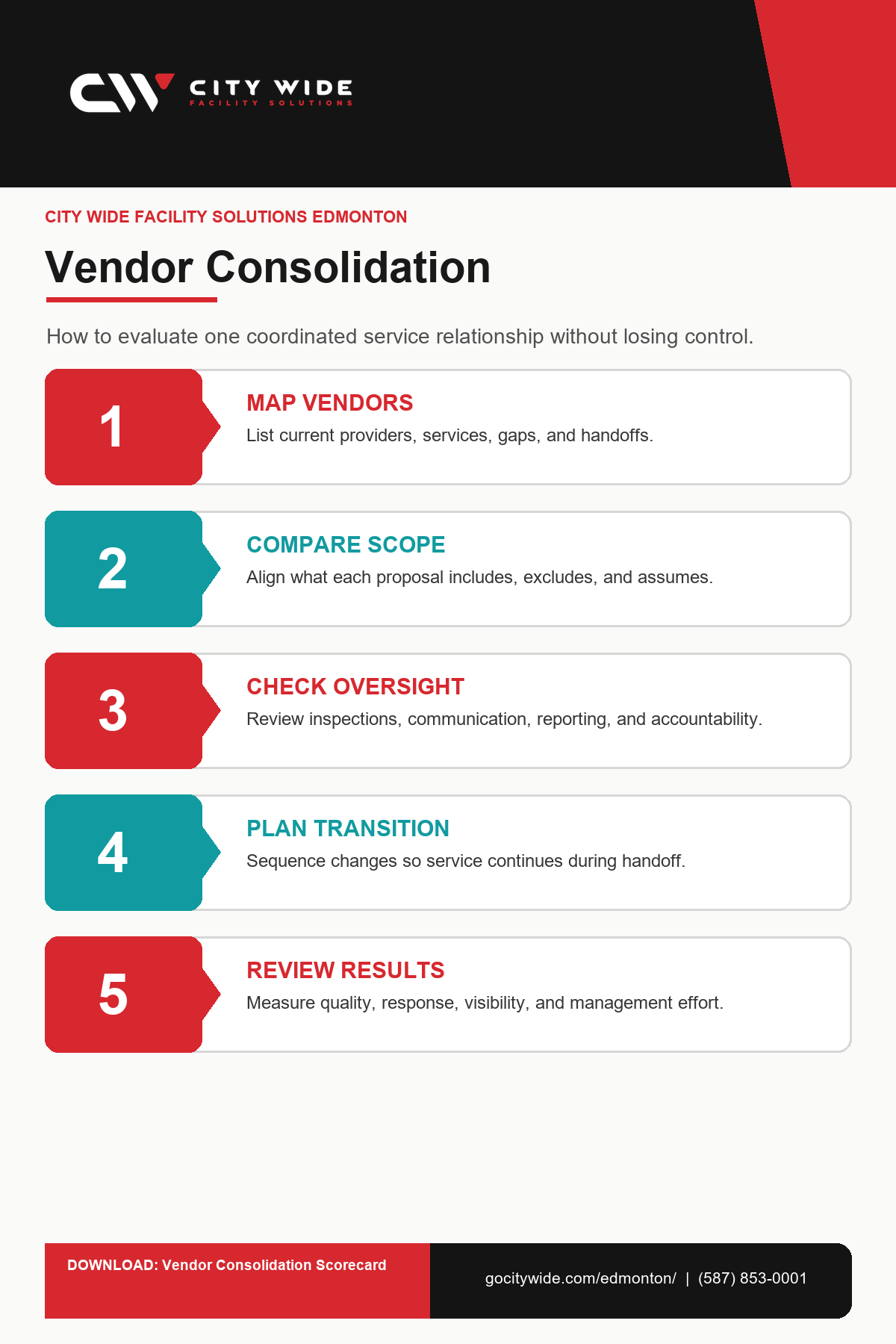
Vendor consolidation can make sense when a property team is spending too much time coordinating overlapping providers, chasing updates, or resolving unclear ownership. The decision should be based on service quality, scope fit, accountability, transition risk, and the management effort saved, not simply on reducing the number of invoices.
Map the current operating model
List every provider, service, location, contract responsibility, communication path, and recurring gap. Note where one request moves between vendors or where no provider clearly owns the next step. This map shows whether the main problem is vendor count, unclear scope, weak oversight, or a combination.
Compare scope and oversight together
A consolidated proposal should be reviewed for inclusions, exclusions, response targets, inspections, reporting, supplies, access, and escalation. A broader scope is only useful if the provider can explain how quality will be checked and how issues will be communicated and corrected.
Plan the transition carefully
Sequence the handoff around contract dates, seasonal work, access, tenant communication, equipment, supplies, and open issues. A transition checklist should identify what transfers, what needs a site walkthrough, and how service continuity will be confirmed during the change.
How City Wide helps
City Wide Facility Solutions Edmonton coordinates cleaning, maintenance, floor care, seasonal services, communication, and follow-up through one point of contact. That model can give property teams a clearer operating route while keeping service expectations documented.
Quick checklist
- Map current providers, scope, and handoffs
- Compare inclusions, exclusions, and oversight
- Assess transition timing and service continuity
- Measure quality and management effort after launch
Frequently asked questions
What is vendor consolidation?
It is the deliberate coordination or reduction of separate service relationships when a broader operating model can improve visibility and accountability.
Does consolidation always reduce cost?
Not necessarily. The decision should consider service quality, coordination time, risk, scope fit, and total management effort as well as price.
What is the biggest transition risk?
Gaps can occur when responsibilities, access, supplies, open issues, or seasonal work are not transferred clearly.
How should a consolidated provider be evaluated?
Review scope, communication, inspections, reporting, escalation, staffing, service continuity, and the provider’s ability to coordinate related work.
Can some specialist vendors remain separate?
Yes. Consolidation should reflect the property’s needs and should not remove a specialist relationship that is required for a particular service.
Download the checklist
Download the Vendor Consolidation Scorecard to help document service requirements, compare options, and prepare for a facility conversation.
Schedule a complimentary facility consultation
City Wide Facility Solutions Edmonton helps commercial properties coordinate cleaning, maintenance, seasonal services, vendor communication, inspections, and follow-up through one point of contact.
City Wide Facility Solutions Edmonton
Unit 206, 3601 82 Ave
Leduc, AB T9E 0H7
(587) 853-0001
gocitywide.com/edmonton/