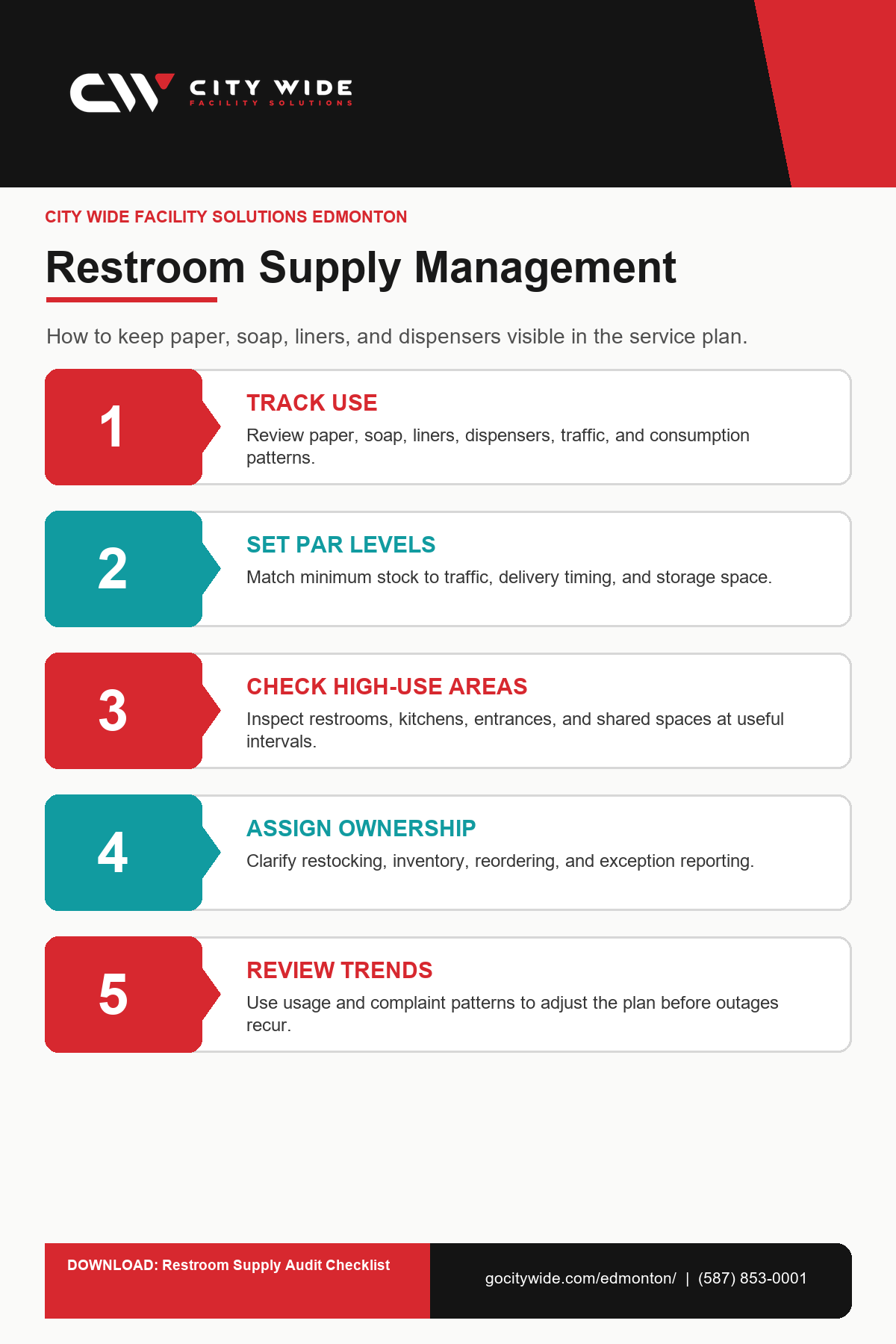
Commercial facilities should manage restroom supplies by tracking use, setting practical par levels, checking high-use areas, assigning restocking ownership, and reviewing consumption or complaint trends. The process should cover paper products, soap, liners, dispensers, storage, and communication when usage changes.
Start with the actual use pattern
A quiet office, retail property, medical facility, and multi-tenant building can have very different supply needs. Review traffic, operating hours, events, occupancy changes, dispenser capacity, delivery timing, and storage limits. This creates a more useful plan than ordering the same quantity every month.
Set ownership and visibility
The service scope should say who checks inventory, who restocks, who places orders, who approves substitutions, and who reports damaged or empty dispensers. A simple supply log can show what was replenished, what is below par, and what requires a property or maintenance response.
Use inspections to reduce repeat issues
Supply checks work best when they are connected to restroom cleaning and daytime facility support. Review paper, soap, liners, dispensers, odour, fixtures, and visible conditions together. When issues repeat, adjust the par level, check timing, storage, or communication path instead of treating every outage as a one-off request.
How City Wide helps
City Wide Facility Solutions Edmonton helps coordinate janitorial, day porter, consumable supply, and quality follow-up through one point of contact. That visibility can make it easier to keep supply responsibilities clear across busy commercial properties.
Quick checklist
- Track supplies by traffic and operating pattern
- Set minimum stock and reorder levels
- Assign restocking and ordering ownership
- Review outages, complaints, and usage trends
Frequently asked questions
Which supplies should be tracked?
Common items include paper products, soap, liners, dispenser supplies, and any consumables included in the facility scope.
How should par levels be set?
Use traffic, operating hours, dispenser capacity, storage, delivery timing, and seasonal or event-driven changes.
Who should restock supplies?
The service scope should clearly assign checking, replenishment, inventory monitoring, and reorder responsibilities.
How often should supplies be checked?
The interval should reflect traffic, usage, dispenser capacity, and the risk of an outage affecting occupants or visitors.
How can teams reduce repeat supply complaints?
Review use patterns, par levels, inspection timing, storage, ordering, and the escalation process together.
Download the checklist
Download the Restroom Supply Audit Checklist to help document service requirements, compare options, and prepare for a facility conversation.
Schedule a complimentary facility consultation
City Wide Facility Solutions Edmonton helps commercial properties coordinate cleaning, maintenance, seasonal services, vendor communication, inspections, and follow-up through one point of contact.
City Wide Facility Solutions Edmonton
Unit 206, 3601 82 Ave
Leduc, AB T9E 0H7
(587) 853-0001
gocitywide.com/edmonton/