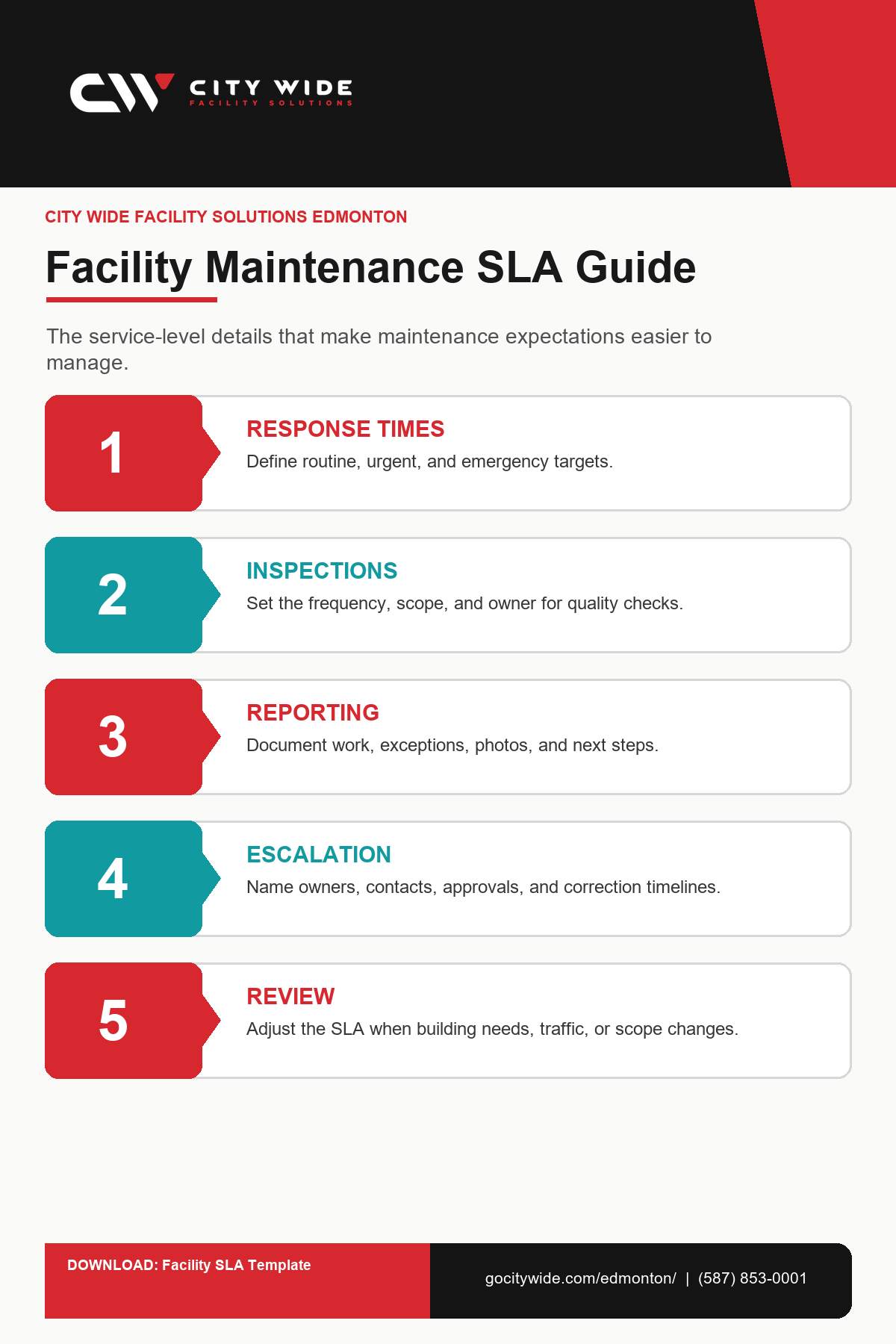
A facility maintenance SLA should define the services covered, response targets, inspection expectations, reporting, escalation, communication, and review process. It should be specific enough for a property team to evaluate performance without turning every request into a new negotiation.
Define the service and priority levels
Start with the work included, the locations covered, exclusions, access requirements, and the difference between routine, urgent, and emergency requests. A priority level should connect to a response target and a communication expectation so the service team and property team use the same language.
Make inspections and reporting useful
The SLA should state how often work or conditions are inspected, what gets recorded, and how exceptions are communicated. A useful report identifies completed work, open items, photos or supporting notes where needed, the next action, and the person responsible for follow-up.
Name escalation and review owners
Escalation should not depend on finding the right person during a problem. List the primary and backup contacts, approval requirements, correction path, and expected updates. Schedule periodic reviews to compare recurring issues, response patterns, service quality, and changes in building use.
How City Wide helps
City Wide Facility Solutions Edmonton helps clients coordinate facility services, communication, quality follow-up, and vendor oversight through one point of contact. A clear operating structure can make SLA expectations easier to apply across related services.
Quick checklist
- Define service scope and priority levels
- Set response and inspection expectations
- Specify reporting and documentation
- Name escalation owners and review cadence
Frequently asked questions
Why use a facility maintenance SLA?
An SLA creates a shared reference for scope, response, communication, reporting, and escalation so performance is easier to review.
What response times should be included?
Set targets for the property’s routine, urgent, and emergency needs. The exact target should reflect the service, site, and operational impact.
How often should an SLA be reviewed?
Review it periodically and whenever building use, service scope, recurring issues, or operating priorities change.
Should inspections be part of the SLA?
Yes. Inspection frequency, documentation, exceptions, and follow-up ownership should be clear.
What happens when a request falls outside scope?
The SLA should explain how the exception is documented, who approves additional work, and how the property team receives an update.
Download the checklist
Download the Facility SLA Template to help document service requirements, compare options, and prepare for a facility conversation.
Schedule a complimentary facility consultation
City Wide Facility Solutions Edmonton helps commercial properties coordinate cleaning, maintenance, seasonal services, vendor communication, inspections, and follow-up through one point of contact.
City Wide Facility Solutions Edmonton
Unit 206, 3601 82 Ave
Leduc, AB T9E 0H7
(587) 853-0001
gocitywide.com/edmonton/