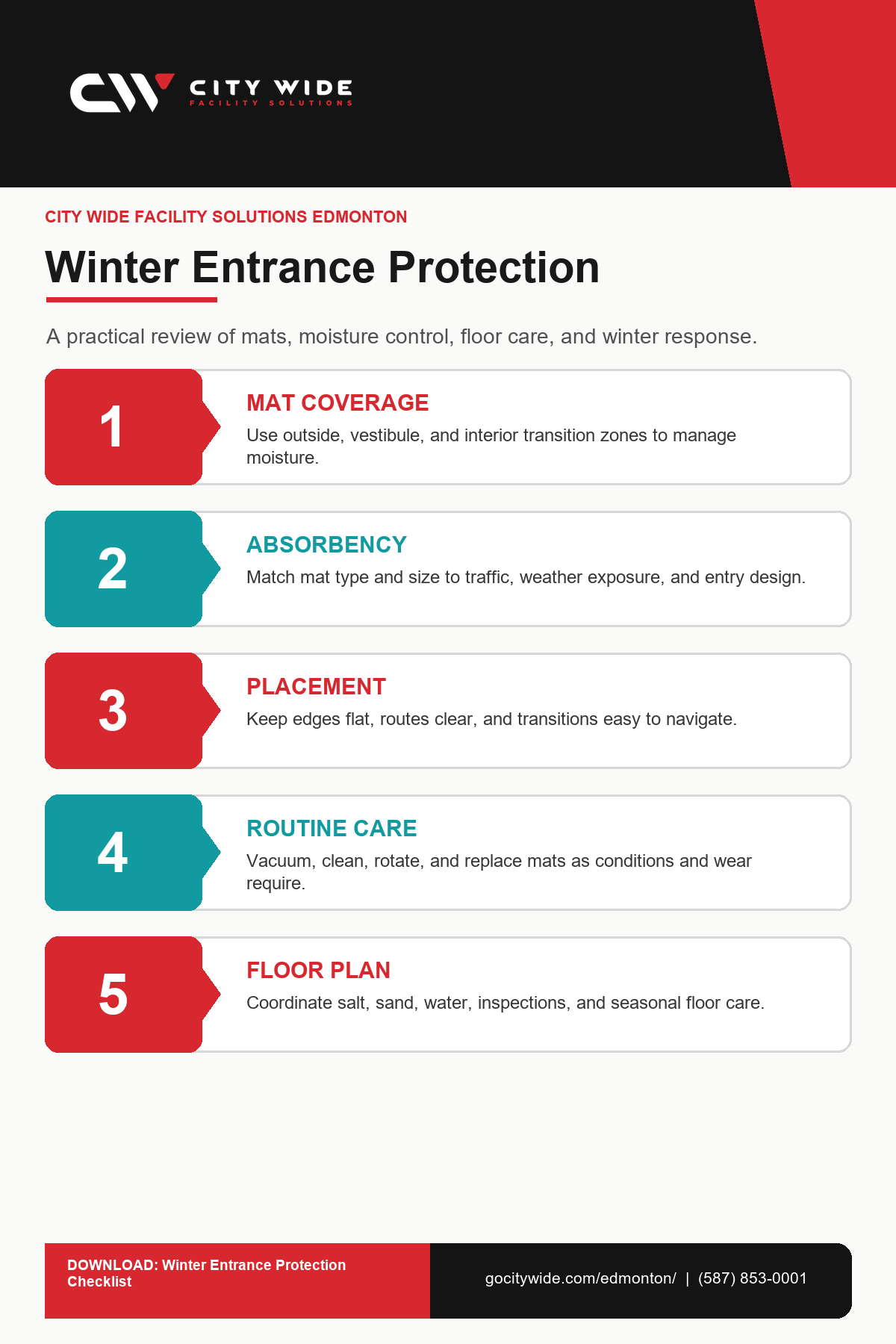
Commercial buildings can protect floors and reduce winter slip risk by planning the full arrival path: exterior approaches, entrance mats, vestibules, interior transitions, cleaning response, lighting, and inspections. The right setup depends on traffic, weather exposure, floor materials, and how quickly moisture is removed.
Use enough matting for the route
A single small mat rarely manages the full amount of moisture brought into a busy building. Review the exterior approach, vestibule, interior entry, and transition to finished flooring. The length, placement, and absorbency should reflect traffic and the time people have to walk across the mat before reaching the main floor area.
Keep transitions safe and usable
Mats should lie flat, stay in place, and avoid creating raised edges or blocked paths. Check transitions, corners, door swings, accessible routes, and areas where snow or water collects. The entrance should be easy to navigate for employees, tenants, visitors, deliveries, and mobility devices.
Coordinate care with floor needs
Winter response should include vacuuming or cleaning mats, removing salt and sand, addressing wet areas, and using floor-care methods appropriate for the surface. Document recurring buildup or finish wear so periodic service can be planned instead of handled only after the floor looks damaged.
How City Wide helps
City Wide Facility Solutions Edmonton helps coordinate janitorial, matting, floor care, inspections, and related winter services through one point of contact. That coordination gives property teams a clearer way to respond as traffic and weather change.
Quick checklist
- Review exterior, vestibule, and interior mat coverage
- Check mat placement, edges, and transitions
- Define moisture, salt, and sand response
- Schedule inspections and periodic floor care
Frequently asked questions
How much entrance matting is enough?
The answer depends on traffic, entry design, weather exposure, and the distance available for people to walk across absorbent matting before reaching finished floors.
Where should mats be placed?
Review exterior approaches, vestibules, interior entries, and transitions. Keep routes clear and mats flat and stable.
How often should mats be cleaned?
Cleaning frequency should reflect traffic, soil load, weather, and the mat’s ability to stay effective between service visits.
What winter residue should be monitored?
Water, salt, sand, and tracked debris can affect floors, entrances, and appearance. Record recurring buildup and adjust response as needed.
Should floor care be scheduled before winter?
A pre-winter review can identify wear, finish needs, and protection steps before salt, sand, and moisture increase the workload.
Download the checklist
Download the Winter Entrance Protection Checklist to help document service requirements, compare options, and prepare for a facility conversation.
Schedule a complimentary facility consultation
City Wide Facility Solutions Edmonton helps commercial properties coordinate cleaning, maintenance, seasonal services, vendor communication, inspections, and follow-up through one point of contact.
City Wide Facility Solutions Edmonton
Unit 206, 3601 82 Ave
Leduc, AB T9E 0H7
(587) 853-0001
gocitywide.com/edmonton/