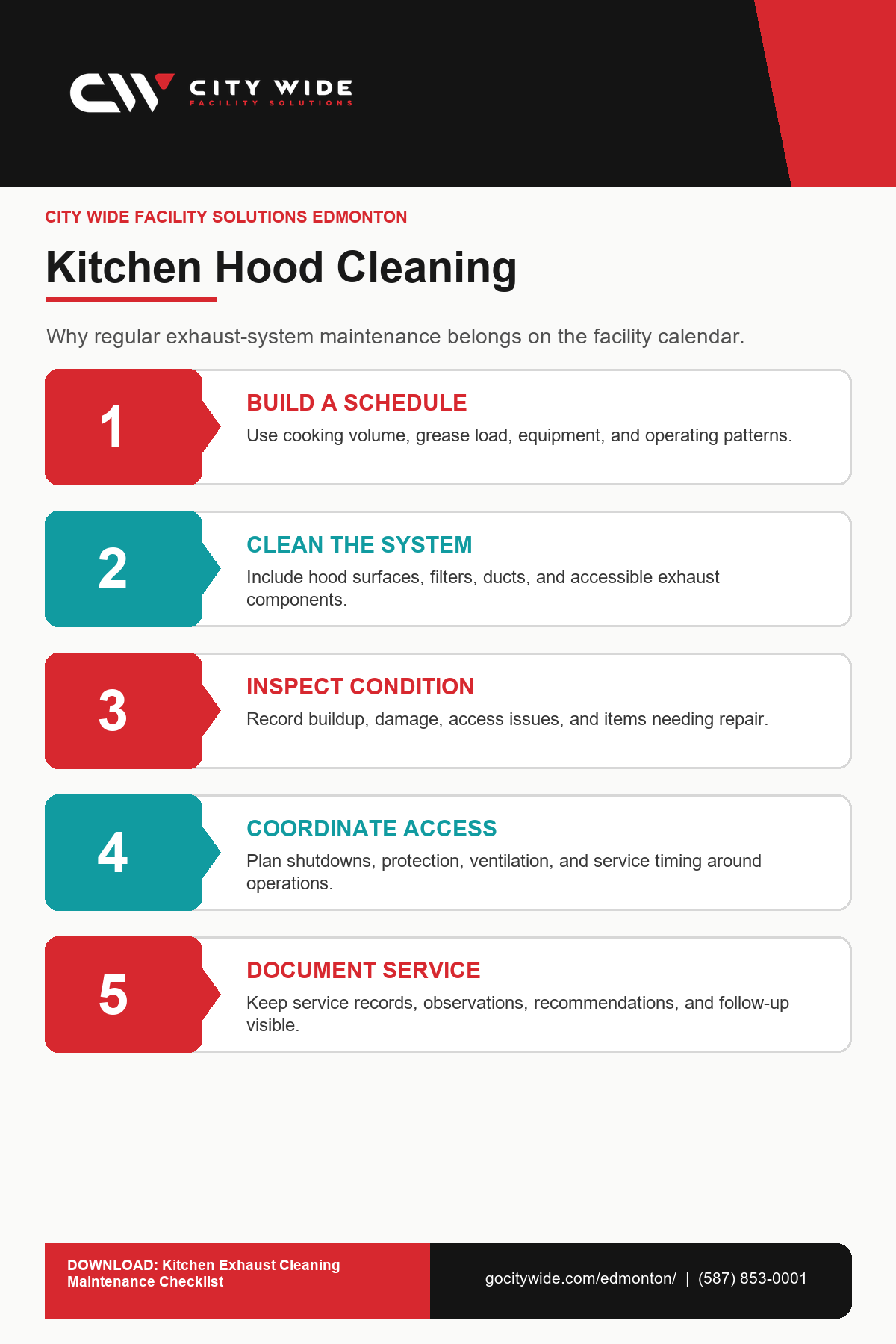
Commercial kitchens should plan hood cleaning and exhaust maintenance around cooking volume, grease load, equipment, operating patterns, and the condition of the system. Regular service helps property and restaurant teams keep buildup, access issues, and follow-up needs visible instead of waiting until the hood or surrounding area shows an obvious problem.
Treat the hood as a system
A maintenance plan should identify the hood, filters, accessible ductwork, exhaust components, surrounding surfaces, and any related areas included by the qualified service provider. The scope should state what is cleaned, what is inspected, what is excluded, and which items require repair or specialist attention.
Set frequency around actual use
High-volume cooking, grease-heavy menus, long operating hours, and frequent production can create a different maintenance need than a lower-use kitchen. Use the facility’s operating pattern, visible buildup, service history, equipment condition, and applicable manufacturer or authority guidance when setting the schedule.
Coordinate access and documentation
Schedule work around kitchen operations and make access, shutdown, protection, ventilation, and cleanup responsibilities clear. Keep records of the service date, areas completed, observations, recommendations, and open follow-up items so the next review starts with useful information.
How City Wide helps
City Wide Facility Solutions Edmonton helps coordinate commercial cleaning, facility maintenance, floor care, and related service needs through one point of contact. That structure can help restaurant operators and property teams keep specialist work aligned with building operations.
Quick checklist
- Set frequency using cooking volume and grease load
- Define hood, filter, duct, and exhaust scope
- Plan access, shutdown, protection, and cleanup
- Keep service records and repair follow-up visible
Frequently asked questions
How often should a commercial kitchen hood be cleaned?
The appropriate interval depends on cooking volume, grease load, operating patterns, equipment, service history, and applicable manufacturer or authority guidance.
What should a hood cleaning scope cover?
The scope should identify hood surfaces, filters, accessible ductwork, exhaust components, surrounding areas, inspection notes, and exclusions.
Can cleaning be done while the kitchen is operating?
Service timing should be planned around operations, access, equipment shutdown requirements, protection, ventilation, and safe site coordination.
What should be documented after service?
Record the date, areas completed, condition observations, recommendations, and any repair or follow-up items that remain open.
Does hood cleaning replace equipment maintenance?
No. Cleaning supports the broader maintenance plan. Equipment repairs, electrical work, suppression systems, and other specialist needs should be handled by qualified providers.
Download the checklist
Download the Kitchen Exhaust Cleaning Maintenance Checklist to help document service requirements, compare options, and prepare for a facility conversation.
Schedule a complimentary facility consultation
City Wide Facility Solutions Edmonton helps commercial properties coordinate cleaning, maintenance, seasonal services, vendor communication, inspections, and follow-up through one point of contact.
City Wide Facility Solutions Edmonton
Unit 206, 3601 82 Ave
Leduc, AB T9E 0H7
(587) 853-0001
gocitywide.com/edmonton/